MACHBORNEarchive
MB-ARCH-0020 ARCHIVE RECORD · OPEN DISTRIBUTION LIVING DRAFT AS OF LS 212

The Four Blocs

Operator dossiers, declassified. Factions are flavour, not systems: a player picks a bloc for a tag, a finish, an insignia and a voice; the same Strider glides the same on every side.

Source: docs/lore/02_factions.md · rendered by build_machborne.py · last updated 2026-08-29. Edits to the lore file flow to this page.

Factions are flavour, not systems. No frame, weapon, pack, mode or map is locked to a bloc. A player picks a bloc for a clan tag, a finish, an insignia and a voice; the same Strider glides the same on every side. The descriptions below explain why the world built the frames it did, so that a player who likes a fantasy knows where the story of it comes from.

The frame each bloc is known for is the one its doctrine made famous, not the only one it fields. Each dossier opens with a sample transmission: forty words of the bloc's own voice, as a loading screen would show it.

MB-BLOC-01BLOC DOSSIER

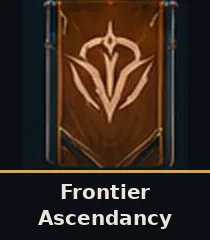
Frontier Ascendancy

Ascendancy burst—free sky ahead. Chart your own Break, claim the burn, leave Concord grids choking on our wake. Striders, Rangers—outrun the ledger. No permit on glory. If the Lattice flinches, we write the next map in Machlight.

Sample transmission · loading-screen voice
Philosophy

Distance is freedom. The Frontier settlements were founded far from any node and learned to live with long transit, thin supply and no help coming. The compact that became the Ascendancy is a mutual aid agreement, not a government, and its members treat every central authority as a toll booth.

Doctrine

Never hold ground you can outrun on. Frontier companies fight by route: get in faster than the defence can react, take what the mission needs, leave by a line nobody has closed yet. They accept casualties in exchange for tempo and consider a slow victory a kind of defeat. Their training emphasises reading unfamiliar terrain at speed, because a Frontier operator is rarely fighting on ground they have seen before.

Aesthetic

Weathered ochre and rust-red over bare alloy; high-visibility orange strips on the Drive housing because Frontier crews do not expect to hide. Silhouette is lean and forward-leaning, the Drive carried low on the spine, with external cells strapped where they can be swapped fast. Equipment feels field-repaired: mismatched panels, hand-cut stencils, straps over latches. Sound is loud, rattly, honest.

How it explains the frames

The Strider is a Frontier design. It is what you build when the mission is "cross forty kilometres of unmapped valley, take one thing, come back," and it has been copied by every bloc since. Frontier companies still run more Striders than anyone and think of the Ranger as a Strider that lost an argument with a quartermaster.

Signature tactic: the Split Run

Two Runners leave the same base on different Breaklines at the same moment; the one the defence commits to becomes the decoy. The chain: the team must first spot the defensive sweep pattern (a scout's damage mark or a sensor read, 3–5 s of information), then both Runners close on Glide, then the escort softens whichever interceptor turns, then one Runner secures the Core and leaves. The enemy can break the chain at every link: deny the spot, intercept both routes, kill the escort, or hold a reserve at the Core Station. Nothing about it is one button.
Callsigns and insignia

Insignia are described, not drawn. The archive records what a mark means; the paint is the company's business.

Kestrel-Nine
a chevron of three descending arrows, hand-stencilled, meaning "downhill, always."
Longtail
a single horizontal line broken once near the right end; the break is the Runner.
Dust Ledger
a Frontier company insignia: a tally mark of five strokes with the fifth drawn as a Burn Arc. Companies count their runs, not their kills.
MB-BLOC-02BLOC DOSSIER

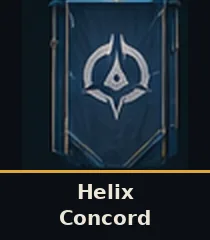
Helix Concord

Priority channel open. Concord nodes hold the Lattice. Glide clean, Burn only on mark, break the Breakline as scheduled. Operators: your Mach Drive is licensed asset, not identity. Report vector drift. Order is the only velocity that survives the Wars.

Sample transmission · loading-screen voice
Philosophy

The Lattice is infrastructure and infrastructure needs administration. The Concord formed to schedule transit and has never stopped believing that the right timetable prevents most wars. It is technocratic, centralised, and sincerely convinced it is the reasonable party.

Doctrine

See first, decide once. Concord companies invest in the information layer before anything else: sensor coverage, relay beacons, drone sweeps, clean communications. Their engagements are slower to start and faster to finish, because by the time a Concord team commits it has usually already counted the enemy. They are weak when their grid is blinded, and they know it, which is why they field more counter-jamming than any bloc.

Aesthetic

Pale grey and white ceramic over cool blue-lit seams; matte, clean, unscratched because Concord equipment is replaced rather than repaired. Silhouette is upright and symmetrical, the Drive housing enclosed in a smooth dorsal shell, sensor apertures visible on the helmet and shoulders. Equipment feels manufactured: tight tolerances, soft clicks, status lights. Sound is quiet, filtered, almost polite.

How it explains the frames

The Ranger as a sensor-carrying generalist is a Concord pattern: a frame that can fight, escort and, above all, report. Concord doctrine treats the Ranger as the node of a small network, the one who keeps the relay online so that a Bulwark two ridges back has an aim solution. Their Striders are scouts first and Runners second.

Signature tactic: the Lantern Line

Before an assault, an Engineer seeds sensor lanterns along the two most likely enemy Breaklines. Interceptors do not chase; they wait at the predicted intersections and fire airburst rounds at the moment the lantern reports a crossing. The chain: place (an Engineer must reach the line, exposed), maintain (the lanterns can be found and destroyed, or jammed), read (the relay back to the interceptors can be raided), fire (the interceptor must still make the shot). Each link is a target.

Callsigns and insignia

Insignia are described, not drawn. The archive records what a mark means; the paint is the company's business.

Meridian
a thin vertical line crossed by three horizontal ticks at equal spacing: a schedule.
Cold Archive
a hexagonal outline with a single dot at the centre; sensor coverage, rendered as geometry.
Relay Four
a Concord company insignia: four small circles joined by lines into an open chain, the fifth link deliberately missing. The missing link is the enemy's job.
MB-BLOC-03BLOC DOSSIER

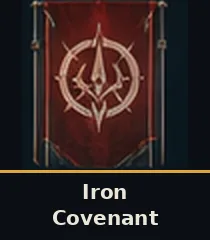
Iron Covenant

Covenant seal active. Hold the line. Bulwarks to front, Mach Drives locked to oath-bandwidth. Glide is luxury; Burn is duty; Break is earned in formation. Deserters are Null. We do not scatter. We do not negotiate the Wars. Stand. Endure. Bind.

Sample transmission · loading-screen voice
Philosophy

What is built and held outlasts what is fast. The Keld reach forged the Lattice's node stations and heavy hulls, and when it seceded it took the foundries with it. The Covenant sees the other blocs as customers who forgot to pay and the Break as an engineering problem nobody has been serious enough to solve.

Doctrine

Weight wins if you can bring it. Covenant companies fight combined-arms: vehicles, fortification, indirect fire, and a spine of heavy frames who hold ground so that everyone else can work. They are the slowest bloc to reposition and the hardest to remove once positioned. Their weakness is time: a Covenant plan that is interrupted before it is set is just a slow column in the open.

Aesthetic

Deep iron grey and oxidised bronze, with dull red warning paint at joints and on the mortar housings. Silhouette is broad-shouldered, low-centred, with the Drive enclosed in armour plate and heat vents along the back. Equipment feels forged: heavy latches, hydraulic sounds, plates that ring when struck. Sound is deep, deliberate, and carries.

How it explains the frames

The Bulwark is Covenant through and through: a frame designed around the question "how much Drive does it take to move a person who is also carrying a siege weapon." Covenant doctrine treats the Bulwark as an anchor: a point on the map that the enemy has to solve before they can do anything else. The Titan and Hammer vehicles are the same idea with tracks.

Signature tactic: the Marked Ridge

The classic beacon-mortar chain, and the Covenant considers it theirs. Blind the enemy grid (a jammer or a raid on a sensor post); insert a Target Beacon by infiltrator; keep the friendly relay online; a Bulwark reads the solution and lays arcing Gravity Mortar fire onto the mark; Runners and vehicles exploit the repair chaos. Six stages, six counters: patrols, sweeps, counter-raid, beacon jamming, counter-battery, reserve defenders.

Callsigns and insignia

Insignia are described, not drawn. The archive records what a mark means; the paint is the company's business.

Anvil-Two
a flat-topped trapezoid, solid fill, no ornament.
Keld Ferrous
a Covenant company insignia: a ring of rivet-dots around a central square; each rivet is a foundry the company holds a contract with.
Lowwater
a horizontal band with a single notch cut from its upper edge, the profile of a held ridge.
MB-BLOC-04BLOC DOSSIER

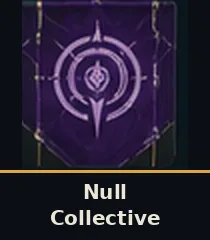
Null Collective

…signal without flag… Lattice is cage. Drives are leashes. We unname the Break, unmake the Breakline, walk the gap where factions end. No Concord. No Ascendancy. No Covenant. Only operators who refuse the script. Disconnect. Become the static.

Sample transmission · loading-screen voice
Philosophy

The Collective has not explained itself since LS 148 and does not intend to. What outsiders know: it is a networked research culture that treats the body as one more system to be revised, that has modified its Drives past anything a foundry would certify, and that regards the Lattice, and the Break, as something to be listened to rather than owned.

Doctrine

Deny, then decide. Null companies fight the information war as the whole war: jamming, false signatures, decoy beacons, cloaked infiltration, drones that report and drones that lie. They rarely take ground and rarely need to; a defence that cannot trust its own sensors is already open. Their weakness is mass: a Null team that is forced into a straight fight on open ground has already lost its argument.

Aesthetic

Matte black and near-black violet, with thin white signal lines that shift when the wearer moves; no insignia visible at combat range, because Null insignia are transmitted, not painted. Silhouette is narrow, asymmetric, with antenna-like extensions and a Drive housing that does not sit where a foundry would put it. Equipment feels grown: seamless, faintly wrong in proportion. Sound is nearly absent, then sudden.

How it explains the frames

The Specter, when it ships, is a Null pattern, and so are the jammer packs and decoy beacons every bloc now fields. Null operators in Strider or Ranger frames run them stripped: lighter, quieter, with more cell and less armour. Their contribution to the Machborne trade is the idea that the map the enemy is looking at is a weapon.

Signature tactic: the Night Switch

A Null jammer opens a 20-second window in the enemy's radar; during it, decoy signatures appear on three Breaklines while the real Runner carries no beacon at all and takes the slow safe route. The chain: jam (the jammer is loud on any sensor still working and must be protected), seed (the decoys can be classified as false by a patient sensor operator), run (the real Runner is unarmed against a defender who simply guards the Core Station), extract (the safe route is slow, and the window closes). Patience beats it; panic feeds it.

Callsigns and insignia

Insignia are described, not drawn. The archive records what a mark means; the paint is the company's business.

Nullset
a transmitted glyph: an empty circle that renders on friendly HUDs only.
Gaslight
three overlapping outlines of the same operator silhouette, offset, one of them solid.
Sable Choir
a Null company insignia (as reconstructed by Concord intelligence): nine short vertical lines of differing heights, a waveform with no repeating period.

Cross-bloc notes

  • Blocs contract Machborne companies; companies are what players actually belong to (guilds). A guild may fly any bloc's colours, switch, or fly none.
  • Bloc leaders are boards and committees. Do not invent a supreme leader.
  • All four blocs field all frames and all weapons. Doctrine is a preference, not a restriction. A Covenant Strider exists; it is painted grey and its operator is teased about it.
  • Rivalries: Frontier resents Concord tolls; Covenant resents everyone's unpaid invoices; Concord finds Null unsettling and says so in bulletins; Null does not comment.